Can You Get High From CBN?

Diogo Ribas • April 29, 2022

CBN doesn’t get as much airtime as CBD or THC, but most cannabis fans have probably heard about it. Throughout the 20th century, rumors started to circulate about this cannabinoid’s unique properties. According to most accounts, CBN-heavy strains will glue users to the couch for hours. 


While there’s not much science on CBN’s effects, there are a few things we know about this cannabinoid. Opting for CBN strains may be more experimental than using CBD or THC flowers, but it may be worth trying for some cannabis users. 
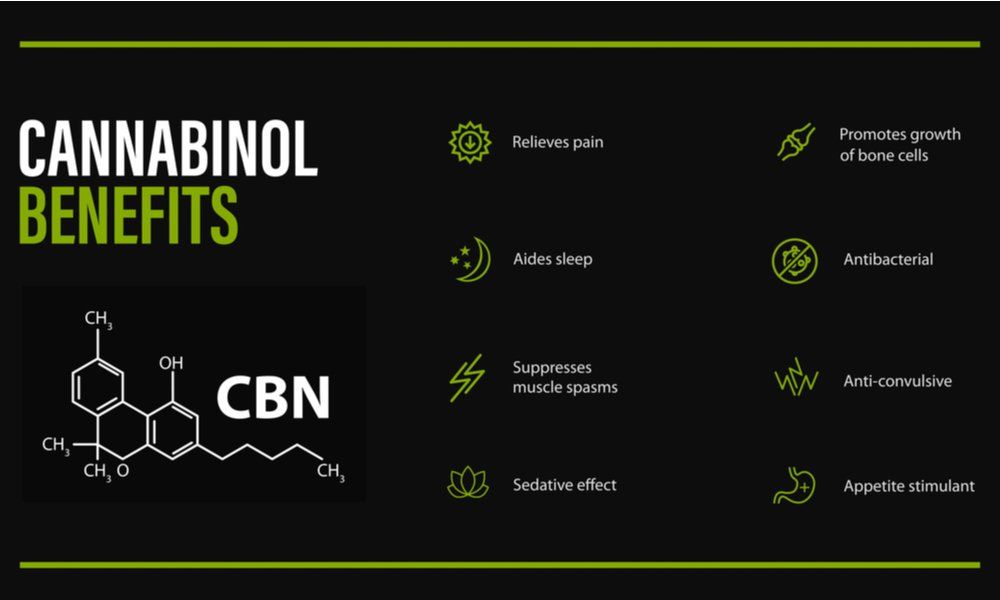
CBN infographic

Where Does CBN Come From?


Cannabinol (CBN) is an all-natural cannabinoid, but it’s usually ≤ 1 percent of a weed strain’s total chemical make-up. However, unlike other cannabinoids, cultivators could quickly increase a strain’s CBN concentration during harvest. The longer people wait to harvest their cannabis, the more CBN will appear. 


However, there is a significant trade-off for harvesting late in the season. The higher a strain’s CBN content, the lower its delta-9 THC percentage will be. Why? CBN is oxidized THC!


As a flowering cannabis plant reaches maturity, its tiny trichomes will change color. The first major shift is from clear to milky white trichomes. Typically, cultivators will start cutting cannabis nugs when most trichomes are opaque and white. 


However, if cultivators let their cannabis plants continue growing, these white trichomes will morph into an orange-red color. This amber hue signals the THC is transforming into CBN molecules. So, if cultivators wanted to, they could naturally increase CBN exposure by waiting for their trichomes to turn orange. 


So, How Does CBN Weed Feel?


Since CBN is broken-down THC, most people assume the two cannabinoids have similar properties. But does that mean you could get high from CBN just like a THC-rich strain?


Interestingly, most reports suggest CBN has a much weaker intensity than THC. In fact, CBN’s psychoactivity is so low it may be closer to non-psychoactive cannabinoids like CBD than THC. 


Although that may sound crazy, please remember that THC and CBD have a similar molecular structure. For those who aren’t aware, the cannabinoid CBG-A transforms into THC-A and CBD-A during each cannabis plant’s vegetative and flowering phases. Therefore, CBN has structural similarities with both THC and CBD. 


If you were to take a CBN tincture, chances are you wouldn’t give you the same buzz as with a THC-rich oil. You could still feel “high” when smoking a CBN-rich flower, but it’s unlikely the CBN isn’t responsible for these psychoactive effects. Instead, you’re probably experiencing residual THC molecules in your marijuana nugs. 


OK, if CBN doesn’t have strong psychoactive properties, does it have
any effects? Anecdotally, cannabis fans swear CBN has sedative properties. Indeed, many cannabis cultivators deliberately harvest buds late to take advantage of CBN’s supposed “couchlock” effects.


Unfortunately,
recent research into this phenomenon has been inconclusive. CBN may have a slightly sedating effect, but there’s no empirical evidence this is the case. 


Some
studies suggest CBN may have antimicrobial properties, but we can’t say for sure how CBN affects the ECS. Most people who take CBN supplements report a relaxed and soothing sensation similar to CBD, but the association with THC may give CBN a slightly higher potency. 


People who already have a high THC tolerance should have no issues moving down to CBN strains or tinctures. However, if customers only have experience with non-psychoactive hemp, it’s best to take it slow with CBN. Since this cannabinoid seems to be slightly psychoactive, it may have a more substantial “head buzz” effect versus CBD. 

SHARE:
By Cali Kosher August 27, 2026
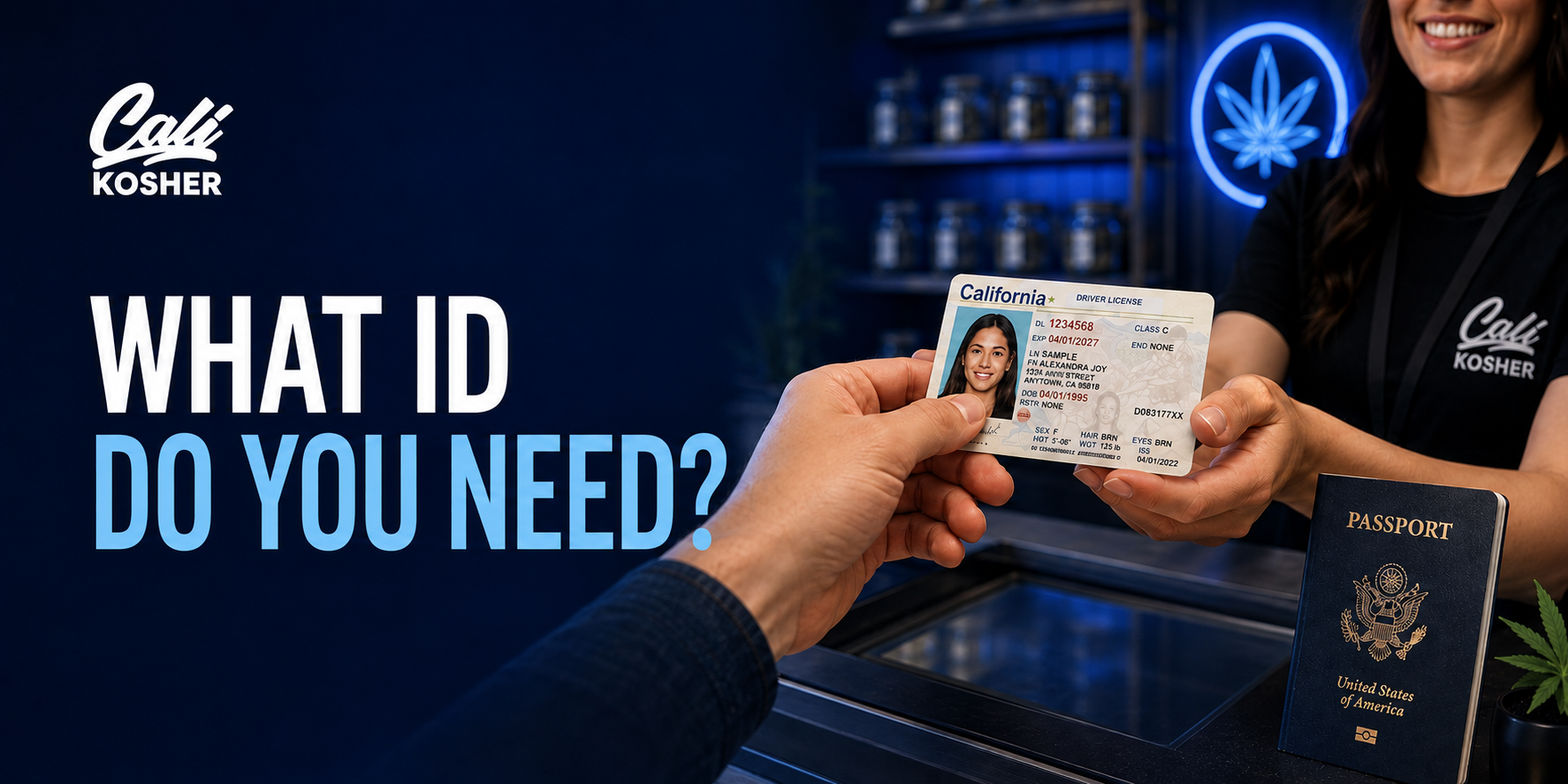
Thinking about stopping by Cali Kosher or another local dispensary for the first time? It's totally normal to have a few questions before you head out. You might be wondering what kind of ID you need, if your out-of-state license will work, or what happens if your ID just expired. We've got you covered with everything you need to know to make your first visit smooth and stress-free. California's rules are actually pretty simple. If you're visiting for adult-use (recreational), you just need to be 21 or older with a valid ID. If you're a medicinal customer, you can be 18 or older, but you'll need both your ID and a valid doctor's recommendation. What Counts as a Valid ID? Before any shop can sell you cannabis, they have to double-check your age and identity. It's the law! Additionally, the identification must belong to the person presenting it; a retailer is required to confirm that the customer’s identity and age match the document before making a sale. Here are the types of ID that California officially recognizes: A valid government issued ID (like a driver's license or state ID card) that includes your photo and basic info. A valid U.S. Armed Forces ID card with your name, birthday, and photo. A valid passport from the U.S. or a foreign government. As long as your identification is official and unexpired, you're good to go. Pro tip: Bring the real deal! Dispensaries are legally required to see your original physical ID; they cannot accept photos, screenshots, or copies. How Old Do You Need to Be? If you are looking to buy recreational cannabis, you need to be at least 21 years old. This rule applies whether you are a local resident or you are just visiting from out of town. Medicinal use is a bit different. If you are 18 or older and have a valid physician recommendation, you are eligible to purchase. Shops will still need to check your ID and your recommendation before you can buy anything. Keep in mind that simply turning 18 does not mean you can walk in and buy recreational products because you specifically need that medical qualification if you are under 21. Visiting from Out of State? No problem! You don't need a California license to shop here. Any valid, current driver's license or ID card from another state works perfectly, as long as it meets those basic requirements we mentioned earlier. Just make sure your ID is in good shape and easy to read so the staff can quickly verify your info. And remember, the 21+ rule still applies! One quick reminder for travelers: while you're free to enjoy cannabis in California, you can't take it across state lines. Also, some cities have their own extra rules, so it never hurts to check the local vibe of your destination. Can I Use My Passport? Absolutely. Whether it's a U.S. passport or one from another country, it's a perfectly valid way to identify yourself. This is a great backup if you don't have a driver's license handy. Again, just make sure it's the original, unexpired document. No copies allowed! What if My ID is Expired? Unfortunately, an expired ID is a no-go. Retailers are required to check that your identification is current. Even if you have a renewal receipt or a temporary doc, it usually won't work unless it qualifies as a valid ID on its own. If your license just lapsed, your best bet is to bring another valid form of ID, like your passport, until your new one arrives. Will They Scan My ID? It depends on the shop! Some dispensaries use electronic scanners to verify age and check for fakes, while others just do a manual inspection. California law allows this, so don't be surprised if they ask to swipe it. Don't worry about your privacy, though—there are strict rules about how retailers can use that info. They can't just keep your data for whatever they want. If you're curious about how a specific store handles your info, feel free to ask them about their privacy policy before they scan. Either way, the goal is simply to make sure you're you and you're old enough to shop. What to Expect When You Walk In Every shop is a little different, but your first visit will usually go something like this: Present valid identification at the entrance or reception area. Wait while an employee verifies your age and identity. Enter the retail area once your eligibility is confirmed. Browse the menu or ask a staff member about available products. Show your identification again at checkout if the store requests it. Don't be shy! If you're not sure what you're looking for, just ask. Our team loves helping visitors understand things like potency, ingredients, and different product formats. You don't need to be an expert to walk through the door. Do I Need a Medical Card? Nope! If you're 21+, you don't need a medical card or a doctor's note to buy adult-use cannabis. Your valid ID is all you need. If you are a medicinal customer, you'll need your doctor's recommendation. While a county-issued Medical Marijuana ID Card (MMIC) is optional for many patients, it can offer some extra perks. Just remember that the recommendation and the state card are two different things! Final Checklist Before You Go Do a quick double-check to save yourself a trip: Confirm that your identification is valid and unexpired Bring the original identification document rather than a photo or photocopy Make sure the photograph and identifying information are readable Bring a valid physician’s recommendation if you are purchasing as a medicinal customer Check the store’s current hours, location, and menu Contact the retailer first if you have an unusual or temporary identification document Do not drive after consuming cannabis Come Visit Us at Cali Kosher! We'd love to see you! Cali Kosher has 3 convenient locations throughout the Central Valley. Before you swing by, check our website for hours and directions. Whether you're headed to Modesto , Oakdale , or Patterson , we've got a great selection waiting for you. Our team is here to help you find exactly what you're looking for, or just to help you compare your options. Feel free to check our online menu ahead of time if you have your eye on something specific. Grab your ID and stop by your nearest Cali Kosher today. We can't wait to see you!
By Cali Kosher August 27, 2026
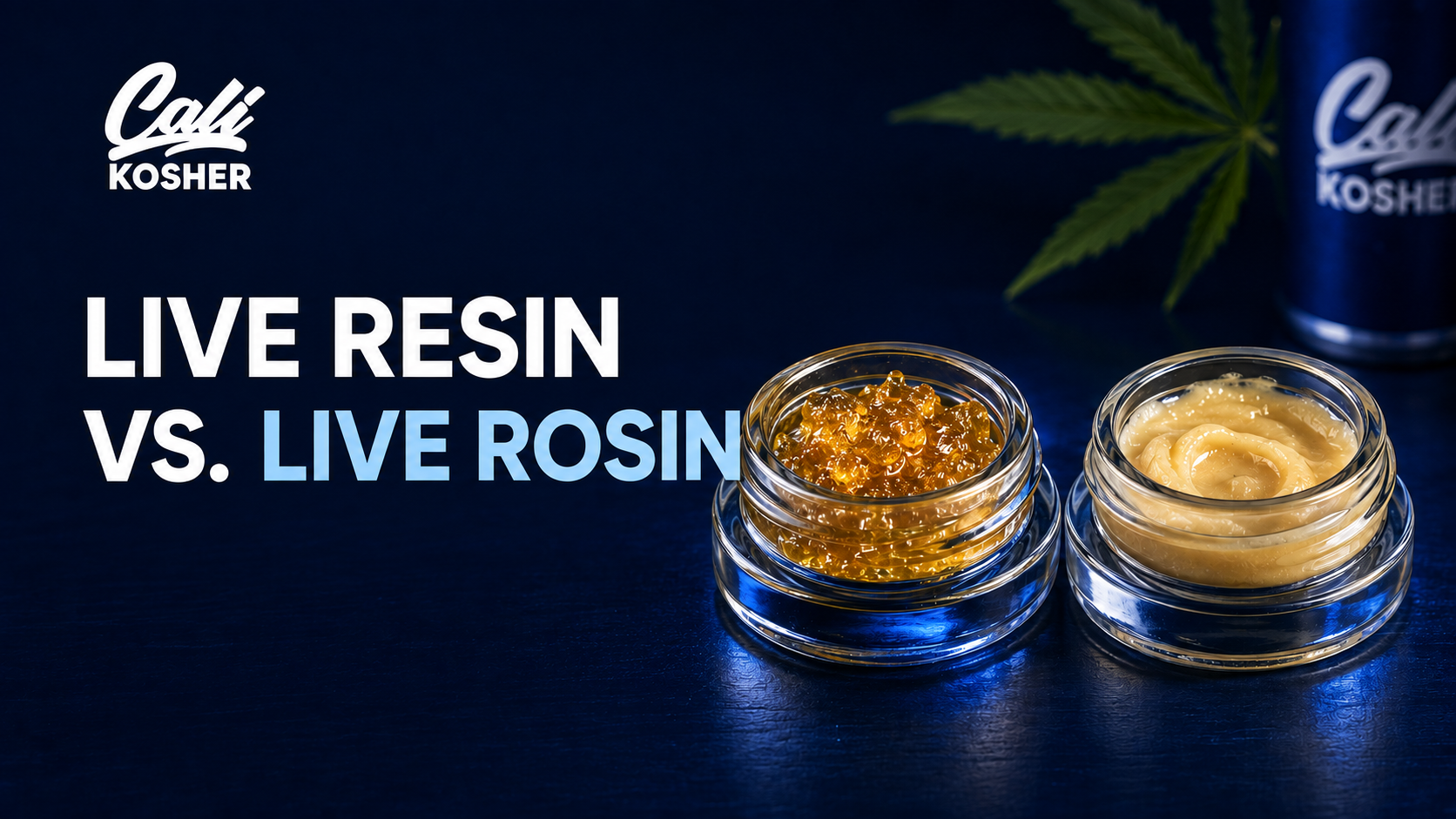
Ever felt a bit lost staring at a dispensary menu, trying to figure out why one concentrate sounds so much like the other? You’re not alone. In the world of cannabis extracts, "Live Resin" and "Live Rosin" are the dabber’s choice, but despite their similar names, they offer totally different experiences. Whether you're a flavor-chaser or a cannabis-purist, understanding the nuances of how these extracts are made will change the way you shop. Let’s dive into the frosty world of live concentrates and settle the debate once and for all. The Core Comparison: Solvent vs. Solventless At their heart, both products start with "live" material—meaning the cannabis plants were flash-frozen immediately after harvest to preserve the delicate terpenes that usually disappear during the drying process. However, the path they take from plant to jar is where they differ. Live Resin: Created using a closed-loop system with hydrocarbon solvents (like butane or propane) to extract cannabinoids and terpenes from the fresh-frozen plant. This is followed by a rigorous purging process to ensure all residual solvents are removed from the final product. Live Rosin: A solventless process where the fresh-frozen plant material is first washed in ice water to create ice water hash (bubble hash). This hash is then dried and pressed between heated metal plates to extract the resin purely through heat and pressure, without any chemical solvents. Textures and Consistency Don't let the looks fool you! Depending on the temperature and agitation used during processing, you might find these in several forms: Badder/Budder: A thick, whipped, and creamy consistency reminiscent of cake-batter or frosting. Its supple texture makes it incredibly easy to scoop and manipulate for the perfect dab. Sauce: A more liquid, viscous consistency that is exceptionally rich in terpenes, offering a highly aromatic and flavorful experience. Diamonds: High-potency, isolated THCA crystals that offer a powerful and focused experience. These are prized for their crystalline appearance and purity. Fresh Press: The rawest form of rosin, boasting a translucent, glass-like quality. It is brittle and shatters easily when cold, eventually "buddering" into a more opaque state over time if not refrigerated. Sugar: A wet, crystalline texture that looks and feels exactly like damp granulated sugar. It’s prized for its granular consistency and high terpene retention. Cold Cure: A soft, stable badder-like consistency achieved by aging rosin at low temperatures. It is the gold standard for high-end rosin enthusiasts due to its shelf-stability and smooth texture. Rosin Jam: A warm-cured texture that creates a unique, syrupy consistency filled with tiny micro-crystals. It offers a distinct sensory profile compared to traditional badders. Testing and Standards Safety first! Every batch undergoes rigorous third-party testing. For Live Resin, labs specifically look for "residual solvents" to ensure every bit of butane has been purged. For Rosin, the focus is often on the terpene profile and purity, ensuring no plant lipids or waxes made it into the final squeeze. Beyond solvents and terpenes, the DCC mandates comprehensive screening for pesticides, heavy metals, microbial contaminants, mycotoxins, and foreign materials. These additional requirements are essential to ensure total consumer safety across all product types. Pop Culture & Trends Concentrate culture is exploding. They represent the "connoisseur" side of cannabis, where flavor profiles are treated with the same respect as a fine wine or a craft espresso. From "Hash Holes" (donuts) appearing in music videos and influencer’s content videos, to the rise of specialized electronic dab rigs, extracts are emerging as a niche hobby. Modern enthusiasts aren't just chasing the highest THC percentage; they are seeking out specific terpene profiles and nuances that define the true character of a strain. Popular cultivars like Runtz, OGs, and Zkittlez remain consistent favorites as consumers continue to explore the sophisticated and diverse world of cannabis concentrates. The Takeaway So, which one should you choose? If you want a punchy, high-terpene experience that’s usually a bit more budget-friendly, Live Resin is a fantastic choice. But if you’re looking for a handcrafted, solvent-free product that represents the absolute pinnacle of plant purity, Live Rosin is worth the splurge. Next time you’re at the Cali Kosher counter, you’ll know exactly what’s in those tiny jars!
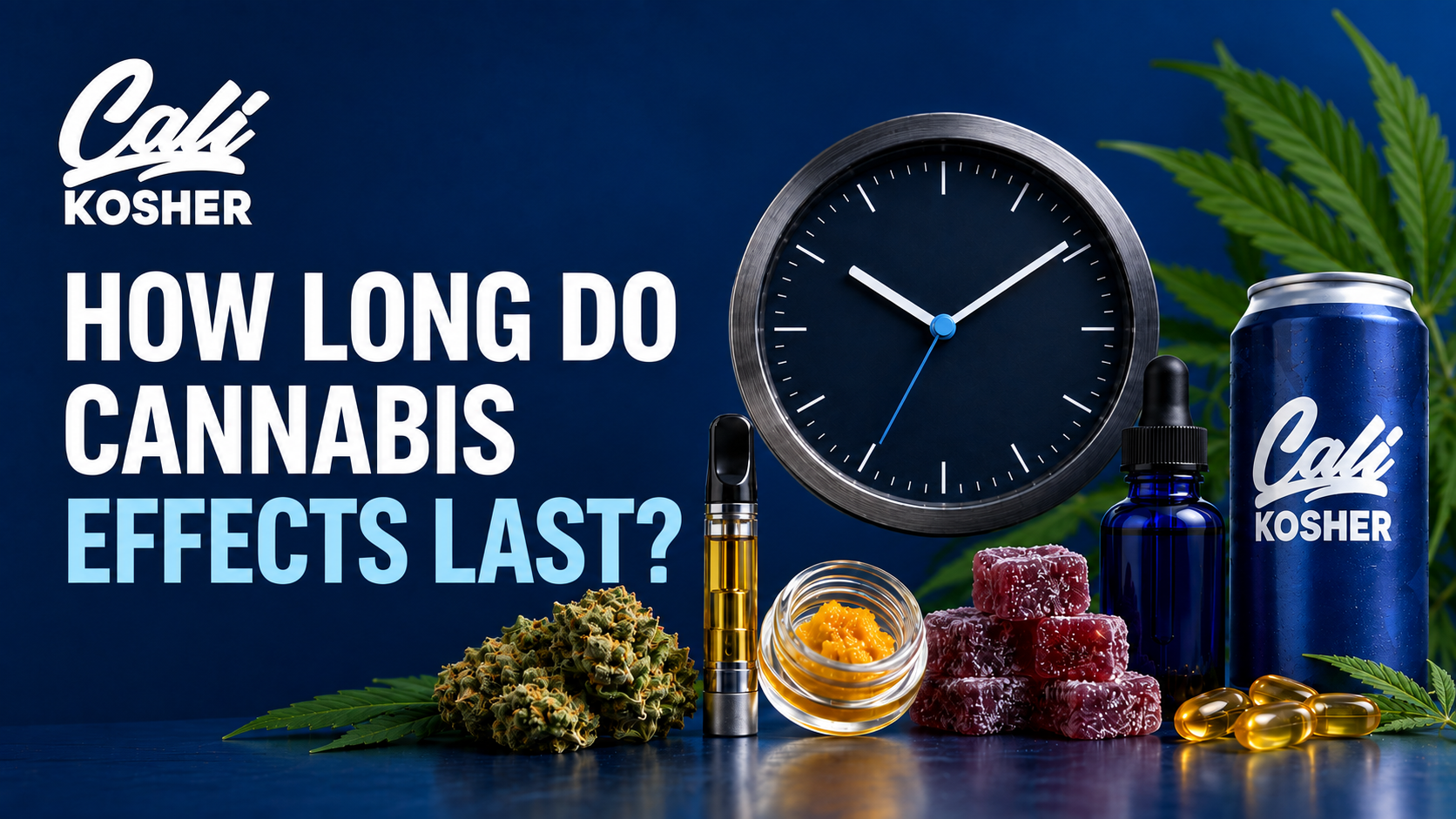
Cali Kosher cannabis guide with clock, marijuana buds, gummies, and glass jar on blue background
By Cali Kosher July 26, 2026
Learn how long a weed high may last based on the product, including flower, vapes, concentrates, tinctures, edibles, beverages, and capsules.
Blue Cannabis poster asking “What does THC percentage really mean?” with product jars and explanatory icons.
By Cali Kosher July 26, 2026
Learn what THC percentage means, how cannabis potency is measured, how to read labels, and why higher THC does not always mean stronger effects.